
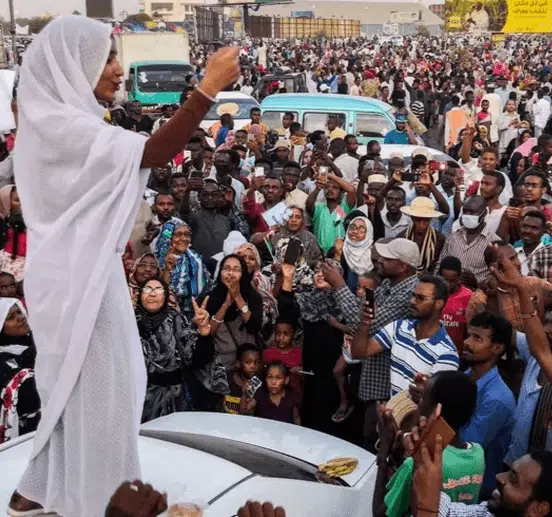
April 15, 2024 marked the one year anniversary of the current civil war in Sudan. Largely ignored and underreported in the US media, the civil war has created a humanitarian crisis with over 8 million people displaced, with over 2 million people having fled the country according to the United Nations. The civil war comes in the wake of a glorious democratic revolution in 2018-2019 that was led by a broad multi-ethnic people’s movement that ended a 30 year dictatorship. However, the people’s movement was denied the full fruit of its sacrifices by the Sudanese military and its US, European, and Arab benefactors who wanted to limit or outright deny the democratic aspirations of the people to retain control over the Sudan’s strategic resources and geo-political positioning, and to deny the African and Arab worlds of a present day example of direct democracy and liberation.
A Revolution Betrayed is a series hosted by Kali Akuno on the Sudanese Revolution, the subsequent counter-revolution and civil war, and their global implications and impact.
Part 1: Sudan and the Imperial Negation of a People’s Aspirations – is a discussion about the Sudanese revolution, counter-revolution and civil war and its global implications and impact. Kali Akuno will be holding this discussion with renowned Sudanese-American journalist Isma’il Kushkush.
Part 2: Lessons from Sudan’s Resistance Committees – with Muzan Alneel and focuses on the role and impact of the Resistance Committees in ending the dictatorship of general Omar Al Bashir. The Resistance Committees laid the groundwork for the Sovereignty Council of Sudan, which was a mixed military-civilian transitional government that ruled from September 2019 until October 2021. The Sovereignty Council was betrayed and dissolved by a military coup by General Abdel Fattah al-Burhan on October 25, 2021. We explore the depth of the Resistance Committees’ impact, their methods of self-organization, and their social and political composition to deepen our knowledge about our capacities for self-governance and the complexities of dual power social movements.
Part 3: The International Dimensions of a Counterrevolution – a conversation Nisrin Elamin on the international dimensions and implications of the counter-revolution and civil war in Sudan. It focuses on what international players and interests undermined the transition to civilian government and what international players and interests are fueling the ongoing civil war with arms, funding, and political cover and why they are doing so. It will analyze what is at play and what is at stake for these players and interests, and what the broader regional and global impacts of this conflagration are and likely will be.
Part 4: Struggle for Self-Determination, Peace, and Regional Development – Chevron discovered oil in the Abyei region in the 1970s. The government in Khartoum then started instrumentalizing the local conflict between the Ngok Dinka, who had resisted the slavers and their policies of Islamization and Arabization for over a thousand years, and the Missiriya, by arming the Missiriya and supporting them to depopulate the area of Abyei. Eventually, due to sanctions and conflict, Chevron pulled out, and China seized control of Abyei’s oil in partnership with the Sudanese government. We will explore the complexities of this struggle in detail in two discussions with Daniel Deng.
Part 5: The Devastating Consequences of Extractive Capitalism in the Two Sudans – a continuation of the conversation with Daniel Deng.